
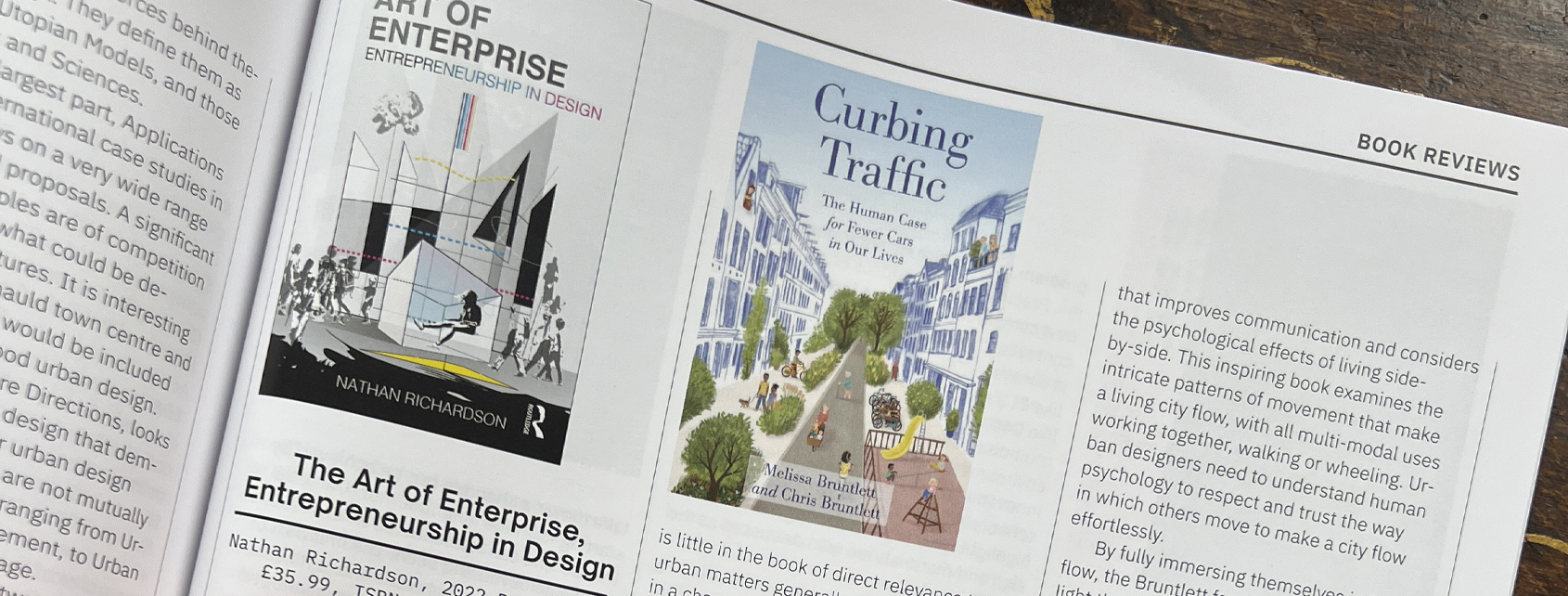
Review of Curbing Traffic: The Human Case for Fewer Cars in Our Lives
“A comfort zone is a wonderful place but nothing ever grows there” – the adventurous and multimodal Bruntlett family – Chris, Melissa, Etienne and Coralie take on the adventure of a lifetime when moving from Canada to Delft in the Netherlands. The family of four find themselves in the ‘City to cure all Cities’, a place that inspired them to write this book to encourage decision makers to take risks and to place the people in our cities, as highest priority.
Imagine a City designed for its population – young and old, for all genders. A City that improves communication and considers the psychological effects of living side-by-side.
This fantastic book examines the intricate patterns of movement that makes a living City flow – with each multimodal use working together, whether that be ‘walking or wheeling’. In order to create a City that flows seamlessly, we must begin to shape our understanding of human psychology and respect and trust the way in which other users move. This book highlights the need to ‘live under the skin’ of the City and encourages City dwellers to go with the flow, to go with the rhythm.
By fully emerging themselves in this City flow, the family of four were able to highlight the importance of having everything you need to live harmoniously, within a short distance by bicycle or by foot. They experienced that a ‘15-minute City’ is not just about ‘a commute’ but about improving health and wellbeing through design and human interaction with buildings, nature, people, rhythms, and the hustle and bustle.
When we are encased in cars and vehicles, we cannot walk freely, nor move safely from the ambient stresses of a commute and of vehicular traffic. As a result, we cannot be in the psychological state of ‘flow’ that is associated with good placemaking and active travel. ‘Flow’ is characterised by an activity where one is fully immersed in a feeling of energised focus, involvement, and enjoyment. Really successful streets and cities can be shaped to better facilitate flow.
The feeling of flow and harmony of course bring other psychological benefits – the Bruntletts examine the link between the ‘wonderdrug’ Oxytocin and the importance of getting out of our cars and into more interactive modes of travel, which encourage social interactions in order to release this feel-good painkiller. Whilst I thought I would be reviewing a book about car use, I instead learned how to ‘placemake’ to reduce stress, relieve loneliness, speed up recovery of physical wounds and even create a positive reaction in the body to improve our immune systems.
Yes, reduction of car-use is a unifying theme in this story, however the intoxicating element of this book is the perspective told from the family, through their own lived experiences. This is an absolute must read for every professional in the built environment!
Written by Hannah

