
Ten Perspectives on Architecture: Teaching Students How to Reclaim Their Cities

Many people have suffered due to the events of the past couple of years. Cities fell silent, people worked from home and students studied from home, often alone. It was during this time that I decided to gather a group of students from my home country, Czechia, to teach an interactive online course called Ten Perspectives on Architecture: The City and the Pandemic. I wanted to help young students learn about what happened to their cities and how they might get involved to help their neighbourhoods come back to life.
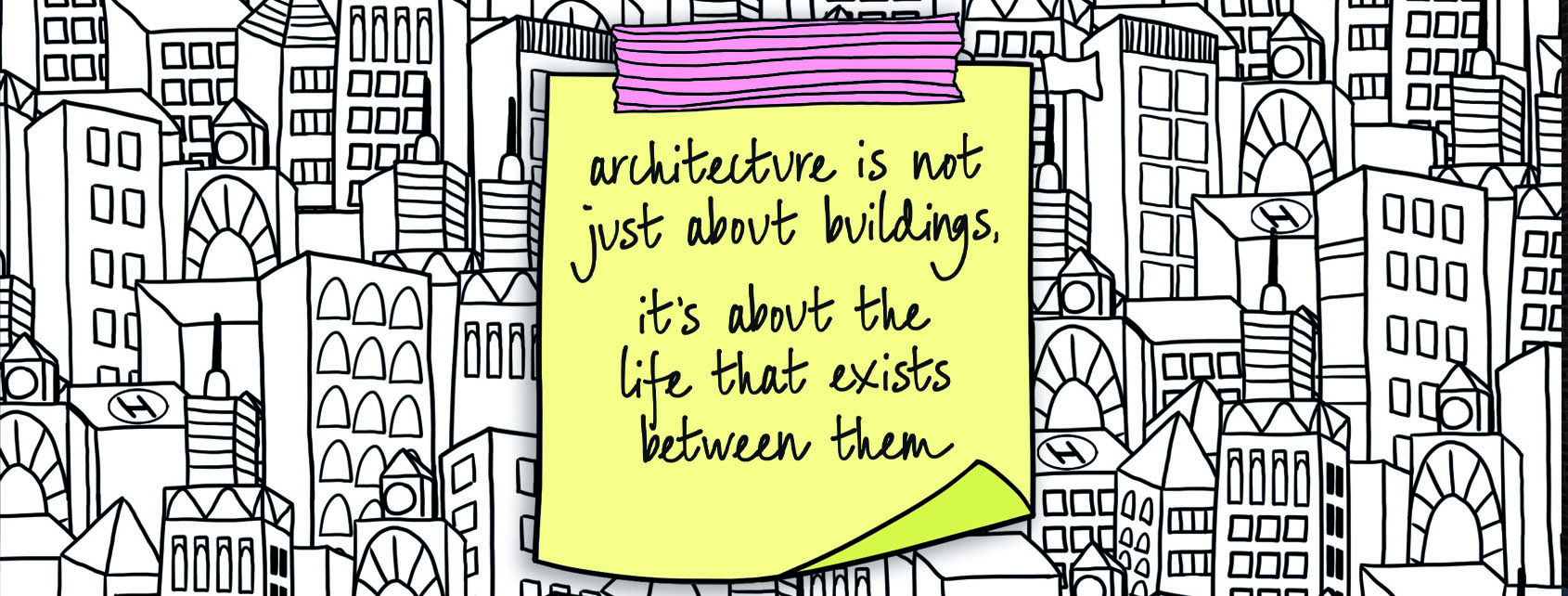
The Ten Perspectives on Architecture course aimed to attract high school students with different interests and ages. Through interactive lectures and design exercises, the course helped them discover the beauty of architecture as a field that deals with cities and spaces in which we all live. In other words, helping them to discover that architecture is not just about buildings, but the life that exists between them. Students met in an online classroom and each week received a creative exercise, which usually required them to go outside and look around, think critically, explore and rediscover their city. The course aimed to spread awareness about architecture, the importance of communities and active citizenship among high school students in Czechia, and thus deepen their relationship with their cities.

At edge, it is important to constantly push our understanding of how people from different backgrounds, cultures, views, or age groups view and interact with the places around them. Teaching the course provided me with a great insight into the minds of students and how they feel about the public spaces they inhabit. As part of the course, we worked on a real-life project called ‘City and the Pandemic’, where students were asked to design, build and carry out an interactive installation in a public space that they know well – responding to the past 18 months of life during a pandemic. Here, students Emma Ripplova and Johana Riegelová discuss their designs in more detail:
Secret Message in a Bottle, Emma Ripplova
WHAT DID I DESIGN?
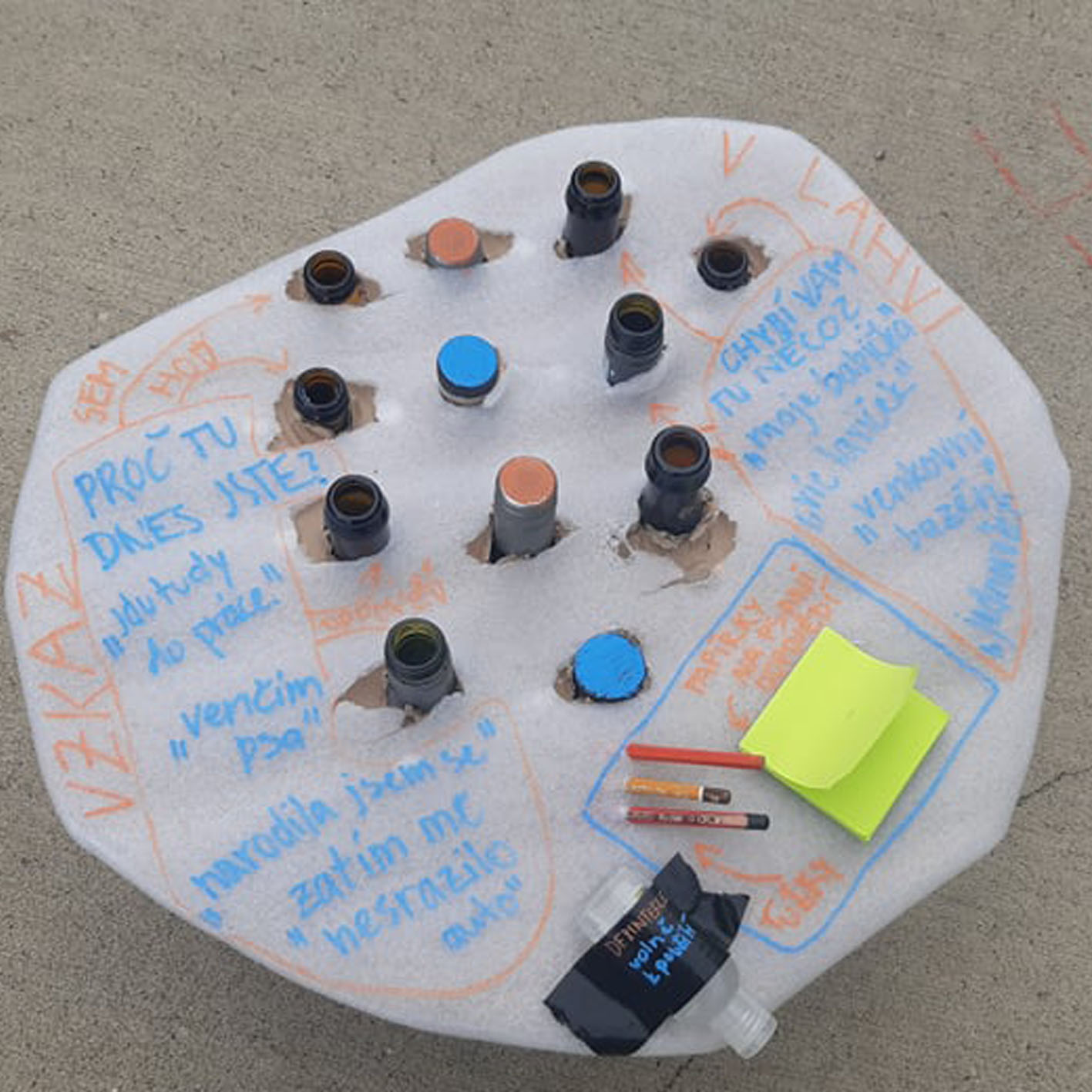
I designed a portable table made of bottles into which passers-by threw messages and answers to two questions regarding the future revitalisation of the area.
WHY ‘SECRET MESSAGE IN A BOTTLE’?
The space I selected is located on a university campus in Prague that will undergo revitalisation in the coming years. Inspired by a participatory questionnaire that most of the users of the space never took, I asked passers-by two questions, “Why are you here today?” and “What does this place lack?”
HOW DID YOU INSTALL YOUR DESIGN?
I placed the object in the space at around 8am on a Sunday morning. With chalk, I drew a pillow on the ground for people to sit on. To be honest, it felt rather strange leaving a table in the middle of a square. Luckily, not many people were up on a Sunday morning. When I revisited the Site at 7pm, I secretly observed people’s interactions with my object, but I tried to remain unassociated with it. I believed passers-by knowing it was me who placed the object might have ruined the experiment. Half an hour later, when I removed the table, I received quite a few curious looks.
WHAT DID IT TEACH ME?
In addition to answering the questions, I was also interested in the age of the respondents, as I had previously observed who frequented the space. The vast majority of responses were from children, who interacted with the space more fearlessly, impulsively and directly. They mostly asked for swings and playgrounds. Then there were several answers from the students, primarily jokey ones – favourites are “sex” and “a pub”. Most of the responses confirmed my own observations as to what was missing from the space. The project also gave me a better idea of how to design similar interventions in urban spaces and helped me overcome the fear of being embarrassed in public.
Tree for Fun Notes, Johana Riegelová
WHAT DID I DESIGN?
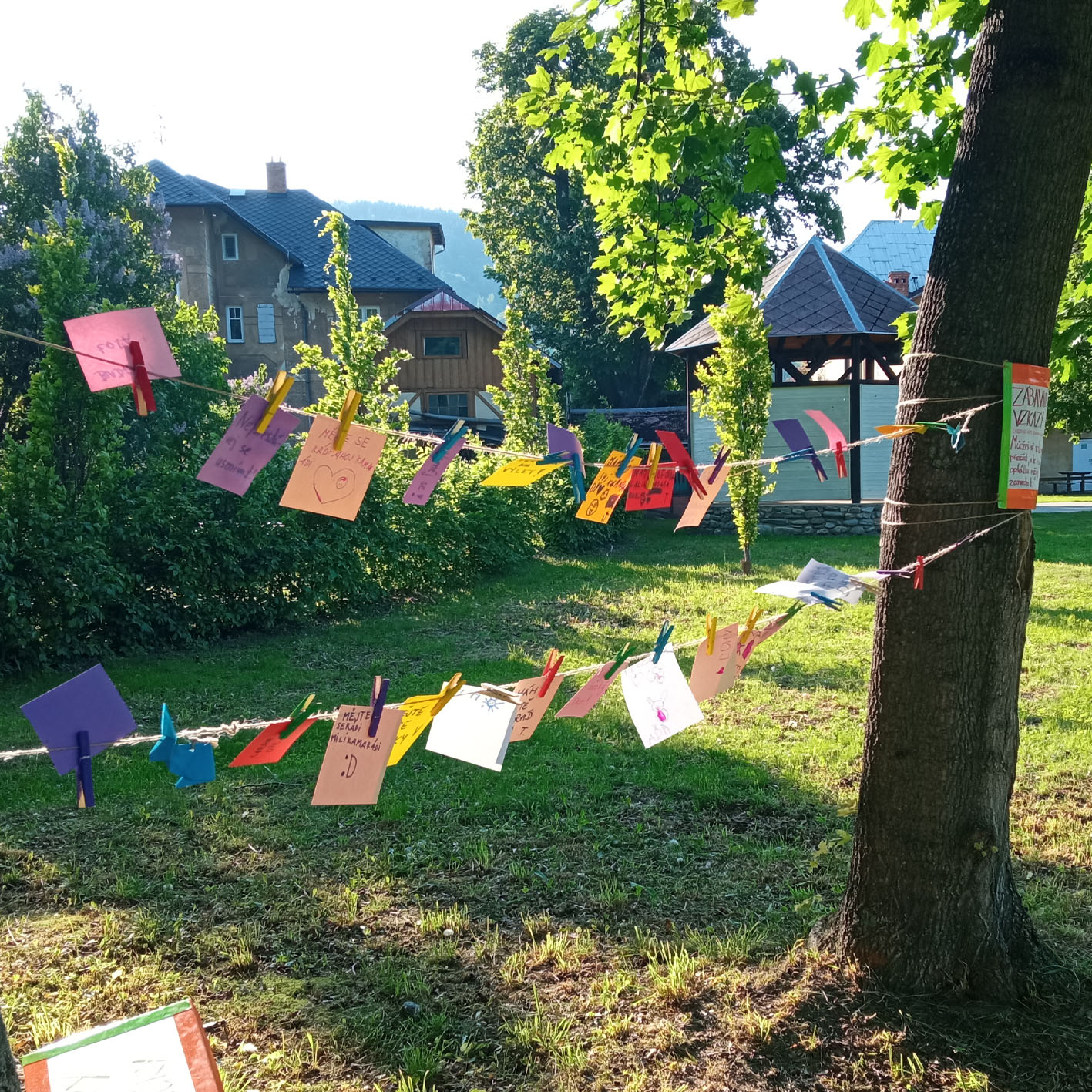
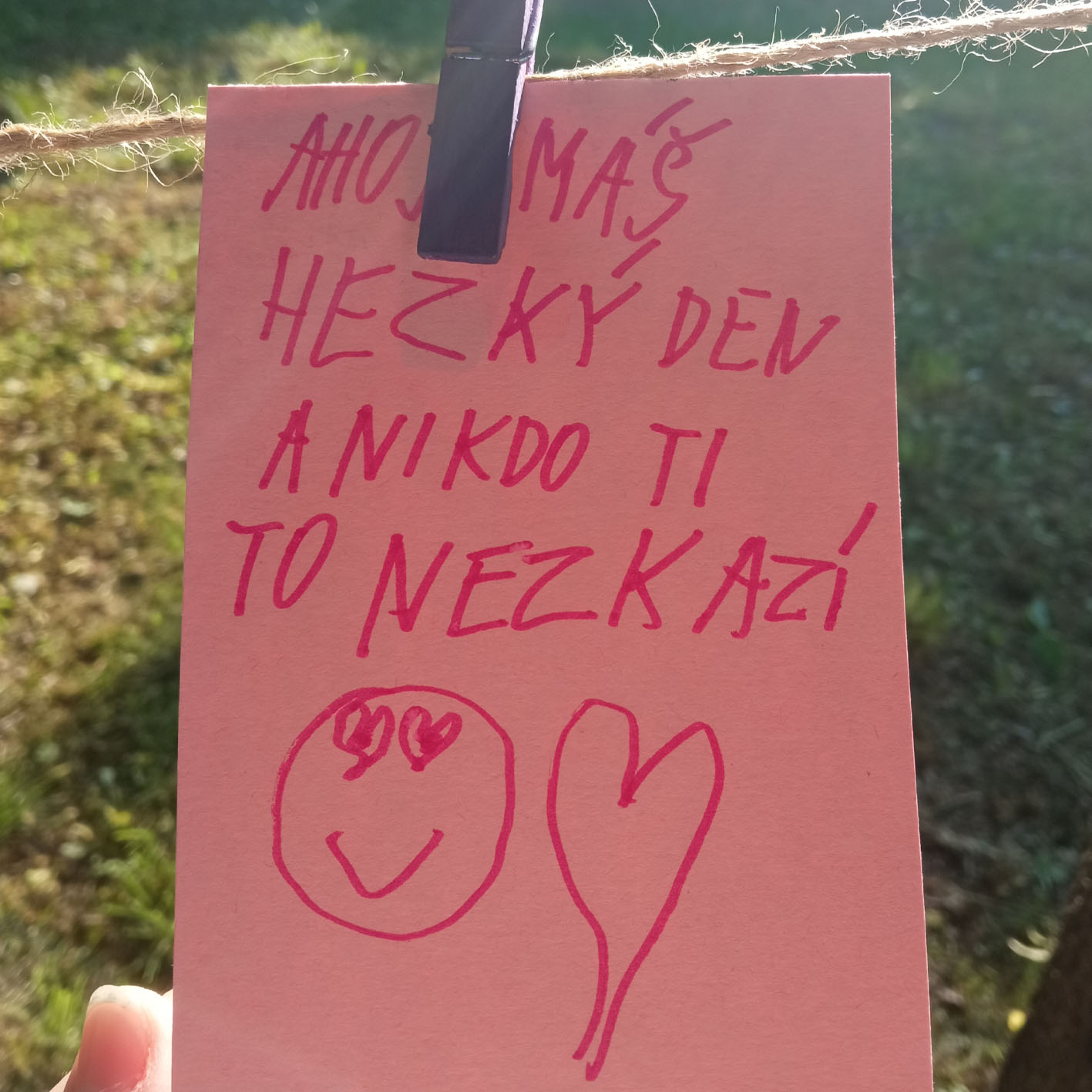
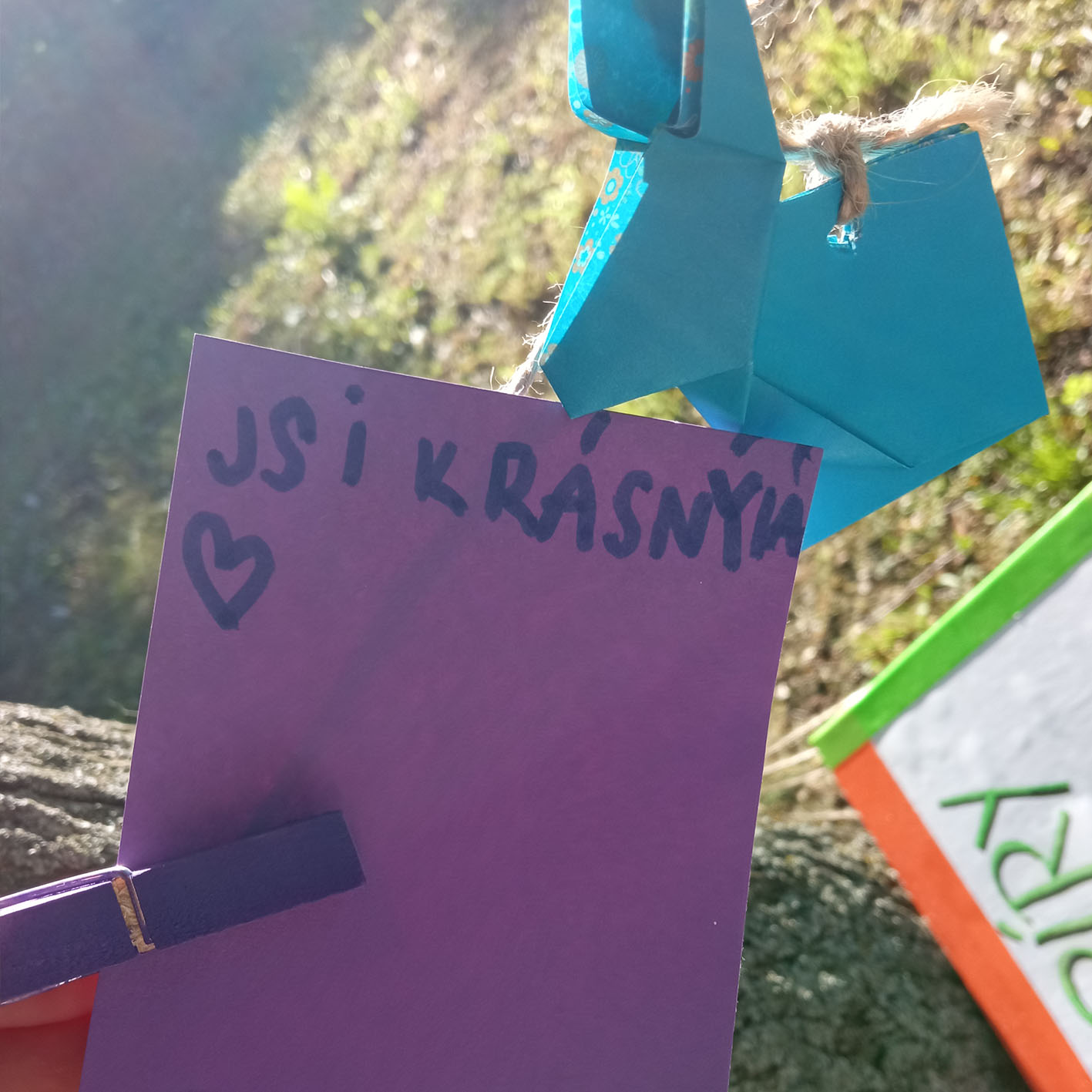
I strung two ropes between trees where people could pin up notes or sketches for the enjoyment of others. This project was about seeing how people reacted to something new in their public space and to see if they engaged.
WHY ‘TREE FOR FUN NOTES’?
My idea came from observing and analysing the place. Having already gathered materials as part of the previous exercise, I explored how I could create something new and exciting for the space. I started by being bold and playful, and through tutorials and a series of iterations, came up with my final design. I was deeply motivated by the way coronavirus made people smile less, how people kept to themselves. I wanted to come up with something that would cheer them up, and help them cheer each other up.
WHERE DID YOU CHOOSE TO INSTALL YOUR DESIGN?
I chose the area by a Veterans Museum in Ceska Ves, a village I live in, because I know the place well and I knew this place gets plenty of visitors.
HOW DID YOU INSTALL YOUR DESIGN?
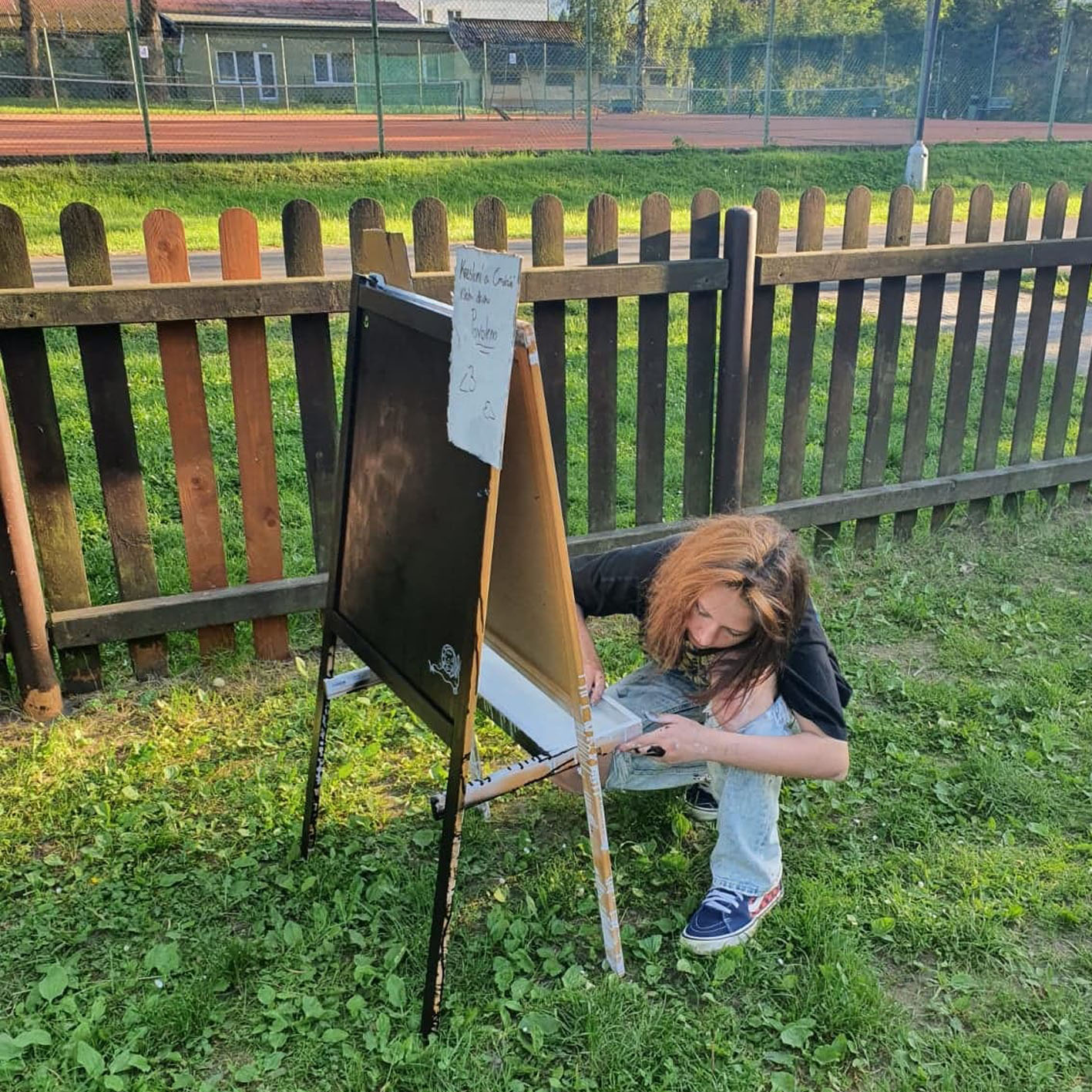
I needed string, a box, cardboard, pins, paper, markers, coloured duct tape, scissors and paint. I started by making the instructions, explaining how my installation was to be used. I labelled a box containing papers and pins, prepping it to be tied to the tree. I then cut pieces of coloured paper, coloured the wooden pegs, and picked out markers to put in the box along with the papers and pegs. I measured the distance between the trees and their perimeters and cut certain pieces of string accordingly, to which the pegs were attached with papers with messages.
As I went to install it (at 7am) I had pinned some of the papers on so that people would have an idea of what they could write there as an example. There was a box tied to the strings containing disinfectant, and I also mounted the instructions to the tree. At 6:30 pm, I picked it up and took it away.
WHAT DID IT TEACH ME?
I was surprised and pleased by how many people participated. I was worried that I would get there after school and find my installation the same as before or maybe even ruined. But when I got there, several new messages were pinned on the tree already! There were messages like ‘Have a nice day’, ‘Smile’, ‘Be cheerful’, and many hand-drawn images from children passers-by.
Seeing people writing notes on my Tree for Fun Notes, interacting with what I designed, that was a feeling like no other. It felt like I had achieved something real! This exercise taught me to trust people in my neighbourhood more, not to be so afraid to interact, but also to trust myself, not to be afraid and nervous and to be bold and creative.

The importance of interaction
The online course was a great way to understand how young people are experiencing and connecting with their public spaces and what they would do to improve them. By promoting interaction, discussion and critical thinking, students of all backgrounds and without prior experience were able to develop and execute creative designs. Their installations ranged from a system for queuing at a bus stop, transforming trees in a park into a space for making people smile, installing bottles for secret notes into a busy public square, to creating a ‘graffiti wall’ in a playground. No matter where their paths will lead in the future, we sincerely hope that they won’t forget what they learnt about their cities and will continually strive to make their neighbourhoods and communities a better place, one idea or step at a time.
It was inspiring to see students reconnect with their favourite spaces and we applaud them all for achieving amazing things. Let us all be a bit more like them: playful, brave and open to new ideas!
Written by Tereza

